Definition & Core Concept
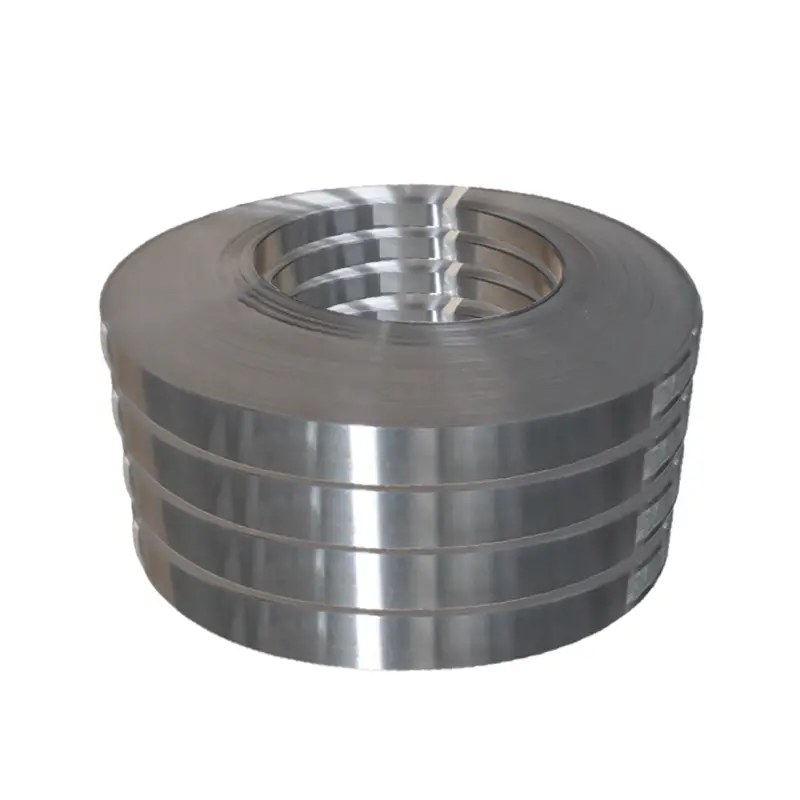
Precision Cold Rolled Steel Strip (also referred to asPrecision Steel Strip) is a high-tier, high value-added steel product manufactured through precision multi-roll cold rolling and controlled atmosphere annealing processes. It is engineered to deliver extreme tolerances in thickness, flatness, hardness uniformity, surface finish, and edge quality — far beyond what conventional cold rolling can achieve.
It is important to clarify a common misconception: cold rolling is a process, while Precision Steel Strip is a product category. Many conventional cold-rolling mills produce “cold-rolled strip,” but true precision steel strip demands a closed-loop system integrating premium feedstock selection, real-time Automatic Gauge Control (AGC), atmosphere-controlled annealing, and rigorous process management throughout the entire production chain.
Precision Steel Strip vs. Ordinary Cold Rolled Steel Strip
While precision steel strip is derived from ordinary cold-rolled steel strip through further deep processing, the two differ fundamentally in accuracy control, product grade, and quality requirements. As industry experts note, “cold rolling relies on scale-based added value, while precision steel strip relies on technology-based added value.
The following table compares the two across seven critical technical dimensions:
| Parameter | Ordinary Cold Rolled Steel Strip | Precision Cold Rolled Steel Strip |
|---|---|---|
| Thickness Control | ±0.03 mm to ±0.05 mm (standard) | Up to±0.01 mm or better (surpassing international limits) |
| Flatness | General flatness; waviness may occur | Excellent flatness withminimal coil set and wave height, critical for high-speed automated lines |
| Camber | Wider camber deviation permitted | Tightly controlled edge camber, typically≤ 2 mm/m for high-precision grades- |
| Hardness | Variation of±10 HV to ±15 HV | Within ±5 HV — no springback issues, consistent forming |
| Surface Condition | Ra typically above0.40 μm | Ra as low as< 0.10 μm (mirror finish); low roughness variation across entire batch |
| Edge Condition | Mill edge or basic slit edge | Slit Edge, Deburred Edge, Round Edge —burr-free, ideal for automated feeding and safety-critical parts |
| Mechanical Properties | Standard tensile/yield; limited customization | Tailored tensile strength, yield strength, and elongation; uniform grain structure for complex deep drawing |
Thickness Tolerance Comparison (Reference Data)
| Thickness Range | Precision Steel Strip | Ordinary Cold Rolled Strip |
|---|---|---|
| ≤ 0.025 mm | ±1 μm | ±25 μm |
| ≤ 0.20 mm | ±1 μm | ±40 μm |
| ≤ 0.25 mm | ±1.25 μm | ±40 μm |
| ≤ 0.50 mm | ±2.5 μm | ±50 μm |
Data source: Industry comparison table for precision strip vs. ordinary cold-rolled strip
Key Technical Indicators in Detail
1. Thickness Control
Thickness tolerance is the defining characteristic of precision steel strip. Through computerized Automatic Gauge Control (AGC) and precision multi-roll cold rolling (typically 20 high Sendzimir mills), manufacturers achieve consistent thickness from the head to the tail of every coil.
Industry benchmarks:
- International standard (JIS G3141 / EN 10140): ±0.03 mm to ±0.05 mm
- Precision grade: up to±0.01 mm (Kennen Steel)
- Ultra-precision grade: ±0.002 mm for critical automotive sensor components
- Available thickness range: 0.05 mm to 3.0 mm (ultra-thin precision foils available)
A deviation of just 0.01 mm in automated high-speed stamping lines can cause catastrophic tool wear, making thickness precision not just a specification but a production necessity.
2. Flatness
Flatness deviations manifest as waviness (edge waves or internal buckles), coil set, or cross bow. Precision steel strip is engineered to minimize these defects through advanced shape control systems during rolling and leveling.
Typical flatness standards:
- Precision grade: ≤ 5 I-Units (ASTM A480)
- High-end grade: ≤ 1.5 I-Units for strips under 0.5 mm
- Flatness tolerance often ranges within±3 mm per meter, depending on grade and application
3. Camber (Edge Camber)
Camber refers to the edgewise curvature of the strip — a lateral deviation from a straight line. It directly affects the accuracy of automated feeding and stamping processes. Precision steel strip manufacturers control camber to extremely tight tolerances, typically≤ 2 mm/m for standard precision grades and≤ 1.5 mm/m for high-precision requirements, referenced to a standard length of 1,000 mm.
4. Hardness & Mechanical Properties
Unlike ordinary cold-rolled strip where hardness variation can reach ±10 HV to ±15 HV, precision steel strip maintains hardness consistencywithin ±5 HV across the entire coil. This uniformity eliminates springback issues and ensures consistent forming quality in high speed stamping operations.
Available hardness states (for stainless precision strip):
- ANN (Annealed): Soft, maximum formability
- 1/2H: Half hard
- 3/4H: Three-quarter hard
- FH (Full Hard): High strength
- EH (Extra Hard): Maximum strength
Typical hardness values by grade:
- SPCC/SPCD (commercial/deep drawn): HV 100-120
- LED industry grade: HV 140-160 with thickness tolerance ±0.005 mm and surface roughness Ra 0.05-0.10 μm-
- High carbon (SK85SB): HRB 90-105 with mirror surface (Ra ≤ 0.8 μm)
Controlled bell-type and continuous annealing treatments under protective atmospheres (hydrogen/nitrogen) recrystallize the grain structure, restoring ductility and relieving internal stress for superior formability.
5. Surface Condition
Surface quality is arguably the most demanding requirement for precision steel strip. Among all cold-rolled flat products, precision steel strip has the highest surface requirements.
Surface finishes available:
- Bright finish: Ra typically 0.3-0.5 μm
- Dull (Matte) finish: Ra 0.3-0.9 μm
- Mirror finish: Ra< 0.10 μm
For reference, ordinary cold-rolled steel strip typically has surface roughness above Ra 0.40 μm. The precision grade’s ability to achieve Ra < 0.10 μm is critical for applications in high-end electroplating, cosmetic coatings, and precision electronic components.
Advanced rolling oil filtration and washing technologies ensure deep-cleansed, grease-free surfaces ready for direct processing, with excellent adhesion for subsequent electroplating, hot-dip coating, painting, or welding.
6. Edge Condition
Edge quality is a frequently overlooked but critically important parameter. Precision steel strip is available in several edge configurations to suit different downstream processes:
| Edge Type | Description | Typical Application |
|---|---|---|
| Mill Edge | As-rolled, no further processing | Low edge-finish requirements |
| Slit Edge | Produced by precision slitting | General continuous processing |
| Deburred Edge | Burrs removed after slitting | Electronic parts, safety-sensitive applications |
| Round Edge | Fully rounded, radius edge | Automated feeding lines, safety-critical stamping |
For precision applications — particularly in electronics and automotive safety components —deburred or fully rounded edges are strongly recommended. Burr-free edges prevent material jamming in high-speed automated feeding systems and eliminate safety hazards during handling.
7. Typical Applications
Precision cold rolled steel strip serves industries where material performance is mission critical:
Automotive Industry
- Safety-related components: retaining clips for brake pads, ABS system magnet sleeves
- Fuel injectors, spring washers, hose clamps
- Precision stamped parts for automotive sensors and motor housings
Electronics & Electrical
- Battery shells and button cell battery components (CR2032, CR2430, LR44, etc.)
- Connectors, shielding covers, and precision electronic components
- (LED lead frames) requiring HV 140-160 hardness and mirror surface
Medical Technology
- Cannulas, insulin pens, and precision medical instruments
- Components requiring biocompatibility and corrosion resistance
New Energy
- Bipolar plates for fuel cells (thickness as low as 0.05-0.20 mm)
- Nickel-plated steel strip for new energy power battery connectors, tabs, and leads
General Precision Manufacturing
- Deep-drawn components, battery cans, precision stamped parts
- Saw blades, textile needles, microelectronics, food packaging materials
- Knife blades, hacksaw blades, spring fastenings