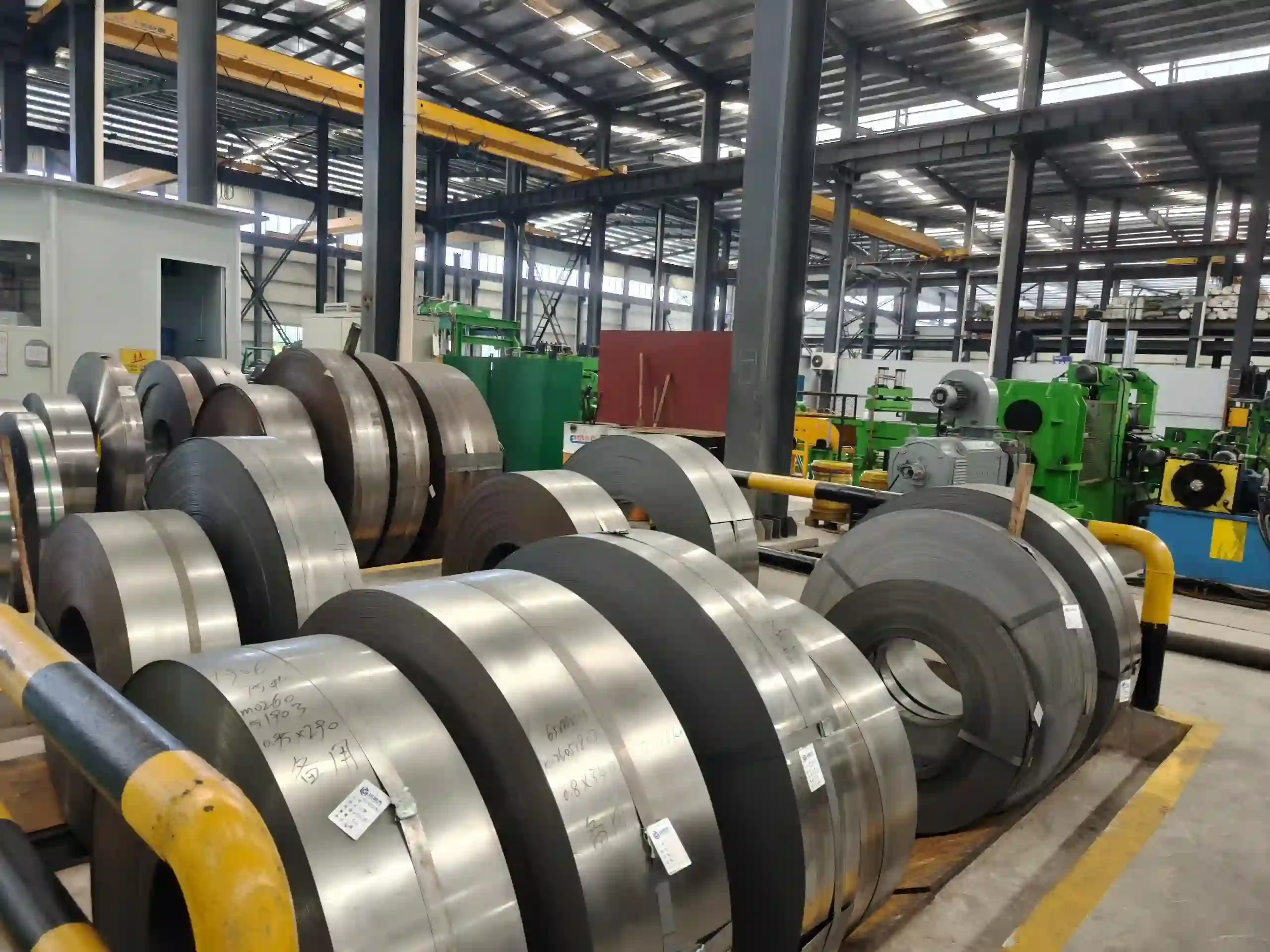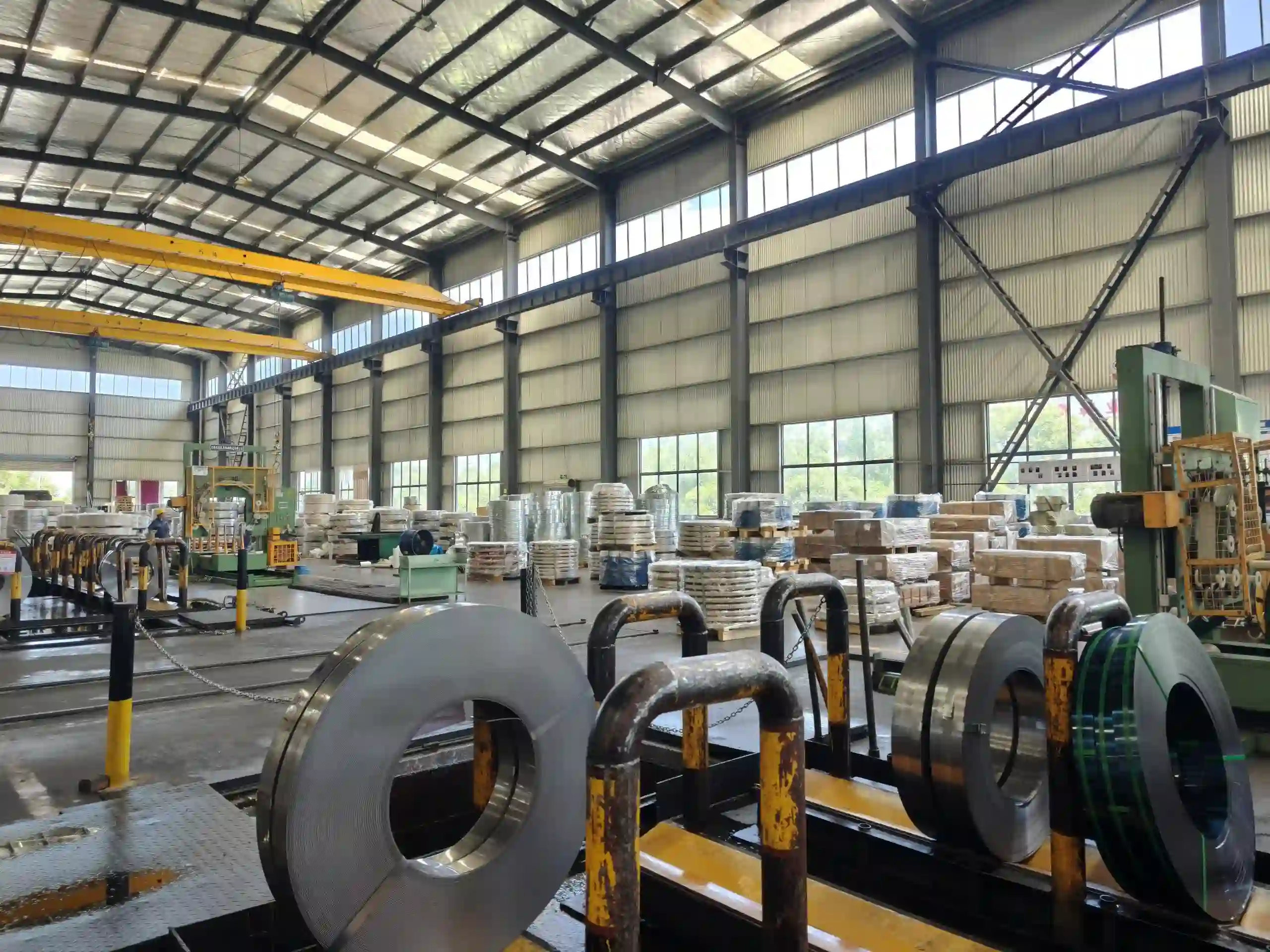
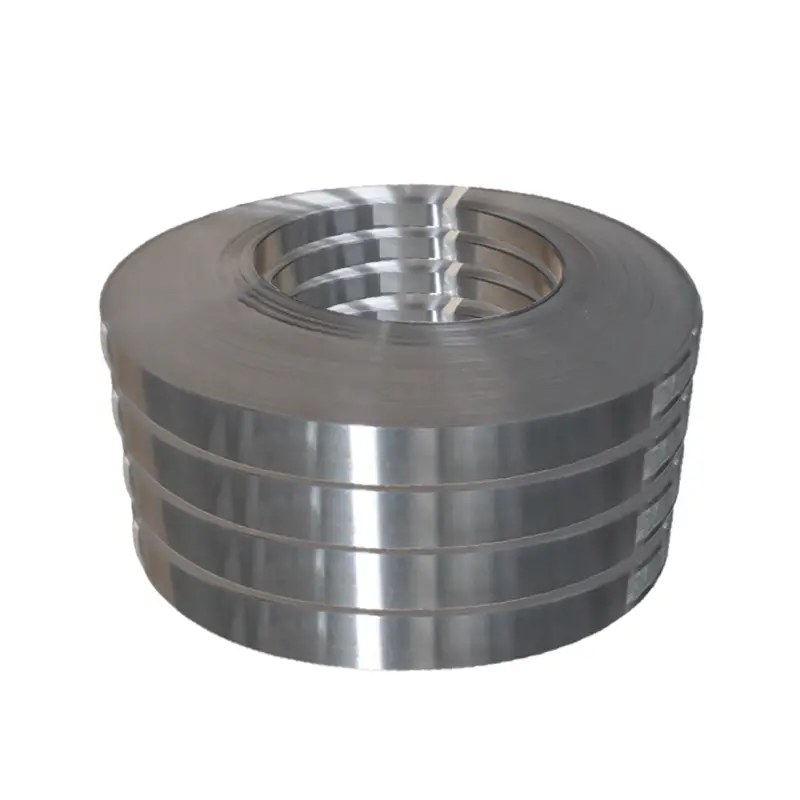
Precision stamping demands more than just a good press and a well-designed die. The steel strip you feed into the machine determines whether you get consistent part quality, long tool life, and stable production—or a stream of defects, downtime, and scrap.
This guide walks you through the key selection criteria forsteel strip for precision stamping, so you can match the material to your specific stamping application.
Why Steel Strip Selection Matters in Precision Stamping
In precision stamping, tolerances are tight, production speeds are high, and downtime is expensive. The wrong strip can cause:
- Excessive burrs and poor edge quality
- Die wear and premature tool failure
- Dimensional inconsistency across the coil
- Feeding issues and misalignment
- Higher scrap rates and material waste
Choosing the rightprecision stamping steel means balancing thickness consistency, dureza, llanura, condición de borde, and material grade—all while keeping cost and availability in mind.
1. Thickness Selection
Thickness is the starting point for any stamping project. It affects:
- Die clearance – The die must be designed around a specific thickness range. Thickness variation beyond tolerance causes improper shearing, burrs, and die wear.
- Press capacity – Thicker material requires higher tonnage.
- Part function – Thickness determines strength, stiffness, and formability.
What to Check
| Factor | Recommendation |
|---|---|
| Tolerancia de grosor | For precision stamping, aim for ±0.01 mm or tighter on critical dimensions |
| Thickness consistency | Variation across the coil should be minimal to avoid feeding and forming issues |
| Application match | Confirm the thickness meets both functional and manufacturing requirements |
Typical thickness ranges for precision stamping:
- Fine blanking: 0.5 mm – 6.0 milímetros
- Progressive die stamping: 0.1 mm – 3.0 milímetros
- Connector and terminal stamping: 0.05 mm – 1.0 milímetros
If your process requires tight thickness control, specifycold rolled steel for stamping with guaranteed thickness tolerance and consistent crown.
2. Hardness Selection
Hardness directly influences:
- Shearing quality
- Die life
- Formabilidad
- Springback behavior
Hardness Ranges and Their Applications
| Hardness Range | Typical Use Case | Notes |
|---|---|---|
| Suave (recocido) | Deep drawing, complex forming | Best formability, lower strength |
| Half-hard | General stamping, flexión | Balance of strength and formability |
| Full hard | Simple blanking, high-strength parts | Minimal forming, higher springback |
| Templado | Precision parts requiring strength | Controlled hardness for consistent performance |
Key Considerations
- Too soft → Material may deform during feeding, causing misalignment.
- Too hard → Increased die wear, risk of cracking during bending.
- Inconsistent hardness → Variable part quality and unpredictable tool life.
For precision stamping, hardness uniformity across the coil is just as important as the nominal hardness value. Specify a narrow hardness range and verify with mill certificates.
3. Flatness Requirements
Flatness is often overlooked but is critical in high-speed precision stamping.
Why Flatness Matters
- Poor flatness causesfeeding problems in progressive dies.
- It leads topart distortion after stamping.
- It affectsstacking and assembly in automated lines.
What to Specify
| Flatness Level | Solicitud |
|---|---|
| Estándar | General stamping |
| Improved | Progressive die stamping |
| Precisión | Fine blanking, high-speed stamping |
Flatness is typically measured in I-units or as a maximum deviation over a specified length. For precision stamping, request flatness data and ensure it meets your feeder and die requirements.
4. Edge Condition
The edge condition of the steel strip affects:
- Die wear
- Part edge quality
- Material flow during forming
Common Edge Types
| Edge Type | Descripción | Best For |
|---|---|---|
| Mill edge | As-rolled, may have irregularities | Low-precision applications |
| borde cortado | Cut to width, may have burrs | General stamping |
| Deburred edge | Smoothed after slitting | Precision stamping |
| Rounded edge | Radiused for smooth feeding | High-speed progressive dies |
Forprecision stamping steel, a deburred or rounded edge is often recommended to reduce die wear and improve feeding consistency. Edge condition should be specified alongside width tolerance.
5. Grados de materiales
The grade of steel determines its mechanical properties, resistencia a la corrosión, and suitability for specific stamping processes.
Common Grades for Precision Stamping
| Calificación | Características | Typical Applications |
|---|---|---|
| Low carbon steel (p.ej., 1008, 1010) | Good formability, low strength | General stamping, soportes |
| Medium carbon steel (p.ej., 1045) | Higher strength, moderate formability | Structural parts |
| Alloy steel (p.ej., 4130, 4140) | Alta resistencia, heat treatable | High-stress components |
| Acero inoxidable (p.ej., 301, 304, 430) | Corrosion resistance, varied hardness | Connectors, terminals, medical parts |
| acero electrico | Magnetic properties | Motor laminations, transformadores |
How to Choose
- Match the grade to thefunctional requirements of the final part.
- Considerpost-stamping processes (enchapado, tratamiento térmico, soldadura).
- Verifyavailability and cost—some grades are more readily available in certain thicknesses and widths.
For precision stamping, cold rolled steel for stamping is often preferred because it offers:
- Tight thickness tolerances
- Excellent surface finish
- Consistent mechanical properties
- Good formability
6. Common Stamping Problems and How to Avoid Them
Even with the right material, problems can arise. Here are common issues and their solutions:
| Problem | Likely Cause | Solución |
|---|---|---|
| Excessive burrs | Wrong die clearance, worn die, incorrect hardness | Adjust die clearance, verify hardness, sharpen die |
| Cracking during bending | Material too hard, insufficient ductility | Specify softer temper or annealed material |
| Feeding issues | Poor flatness, edge burrs, thickness variation | Request precision flatness, deburred edges, tighter thickness tolerance |
| Dimensional inconsistency | Hardness variation, thickness variation | Specify narrow hardness range, consistent thickness |
| Die wear | Hard inclusions, abrasive material, poor edge condition | Use cleaner steel, deburred edges, appropriate hardness |
| Springback | Alta resistencia, wrong die design | Adjust die design, consider softer material or overbending |
Selection Checklist
Before finalizing your steel strip specification, confirm:
- □ Thickness and tolerance meet die and part requirements
- □ Hardness range is suitable for forming and shearing
- □ Flatness is adequate for feeding and part quality
- □ Edge condition reduces die wear and feeding issues
- □ Material grade matches functional and post-processing needs
- □ Supplier provides consistent quality with mill certificates
- □ Cost and lead time align with production schedule
Why Choose Our Precision Cold Rolled Steel Strip?
NuestroPrecision Cold Rolled Steel Strip is engineered for precision stamping applications. Ofrecemos:
- Tight thickness tolerances (±0.005 mm available)
- Controlled hardness ranges for consistent performance
- Excellent flatness for high-speed feeding
- Deburred and rounded edge options
- A range of grades including low carbon, aleación, and stainless steel
- Full traceability and mill certificates
Whether you are stamping connectors, terminals, soportes, or precision components, we can supply the right strip for your process.
Related Solutions
- P01 — Precision Cold Rolled Steel Strip: Learn more about our core product for stamping applications.
- Solution — Precision Stamping & Forming: Discover how we support stamping manufacturers with material selection, technical data, and supply chain reliability.
Need Help Selecting the Right Steel Strip?
Our team can help you match the material to your stamping process. Share your part drawings, tolerance requirements, and production volume, and we will recommend the optimal strip specification.
Contáctanos hoy to request samples or discuss your precision stamping steel needs.https://cgoodsaw.com.cn/about-us/